Kalachakra lineage
Jonang became the principal institutional home of the Dro lineage of the Kalachakra Tantra and its completion-stage yogas.
The Jonang tradition preserves one of Tibetan Buddhism's most distinctive unions of philosophy and tantric practice: the Zhentong view of luminous Buddha-nature and the complete Dro lineage of the Kalachakra system.
For centuries many believed the school had disappeared after the upheavals of the seventeenth century. It survived instead in the mountain regions of eastern Tibet, re-emerged in India and Mongolia, and today continues through monasteries, retreat centers, scholars, and teachers serving a global community.
Jonang became the principal institutional home of the Dro lineage of the Kalachakra Tantra and its completion-stage yogas.
The tradition is known for its Great Madhyamaka articulation of other-emptiness, presenting Buddha-nature as luminous, present, and empty of adventitious obscurations.
Though suppressed in Central Tibet during the seventeenth century, Jonang survived in eastern Tibetan regions and now re-emerges globally through study, retreat, and teaching.
Jonang memory is carried through sacred narrative, historical transmission, and monastic continuity. The result is a tradition that links Indian tantric roots, Tibetan philosophical creativity, periods of persecution, and a modern global renaissance.
Jonang established in the Jomonang valley
Taranatha founds Takten Phuntsok Ling
Recognized publicly as an independent tradition
The Dro lineage of the Kalachakra took shape through Indian and Kashmiri masters and Tibetan translators, establishing the basis for later Jonang transmission.
Kunpang Tukje Tsondru settled in the Jomonang valley and gathered the transmissions that would define the Jonang school.
Dolpopa systematized Zhentong and Jetsun Taranatha expanded the school's reach, architecture, practice cycles, and historiography.
The tradition lost its major Central Tibetan institutions, survived in Amdo and Kham, and was formally recognized again in the modern era.
The Kalachakra cycle is not simply one subject among many. In Jonang it provides the ritual, meditative, and subtle-body framework through which the school understands the relationship between cosmos, body, awareness, and awakening.
Training begins with preliminaries, refuge, bodhicitta, purification, and the generation stage.
Completion-stage training emphasizes controlled retreat, subtle-body practice, and signs of meditative stabilization.
The six vajra yogas aim at direct transformation through the channels, winds, drops, and the clear light nature of mind.
The tradition's story now stretches from the historical valleys of Central Tibet to the sanctuary networks of Amdo and Kham, the monastery in Shimla, and a renewed presence in Mongolia and the West.
A major stronghold in eastern Tibet where monasteries, retreat communities, and Kalachakra festivals preserved the lineage after suppression.
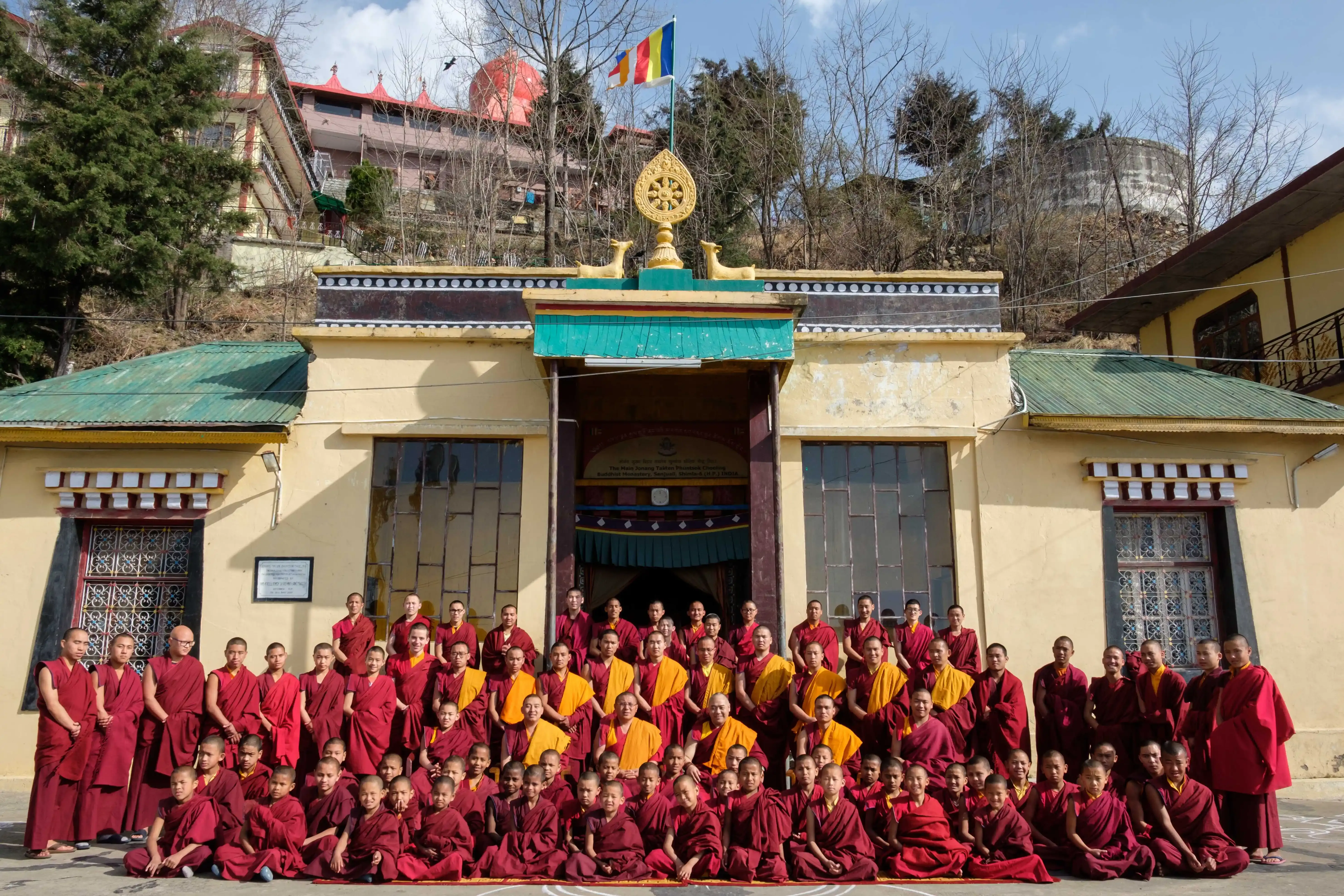
Main Jonang Takten Phuntsok Choeling now serves as a living center of study, ritual training, and monastic education in exile.
Through the legacy of Zanabazar and the Jebtsundampa line, Jonang memory intersects with the broader cultural history of the Mongolian Buddhist world.
New programs and translations now make teachings once hidden in isolated regions available to students across the world.
Jonang is best approached as a living union of history, contemplative training, and philosophical daring, not as an isolated doctrinal curiosity.
Read the story of Main Jonang Takten Phuntsok Choeling in Shimla and its role as a living center in exile.
Explore the historical roots, philosophical identity, and modern resurgence of the Jonang school.
Follow the distinctive place of Kalachakra in Jonang training, meditation, and subtle-body yogic practice.
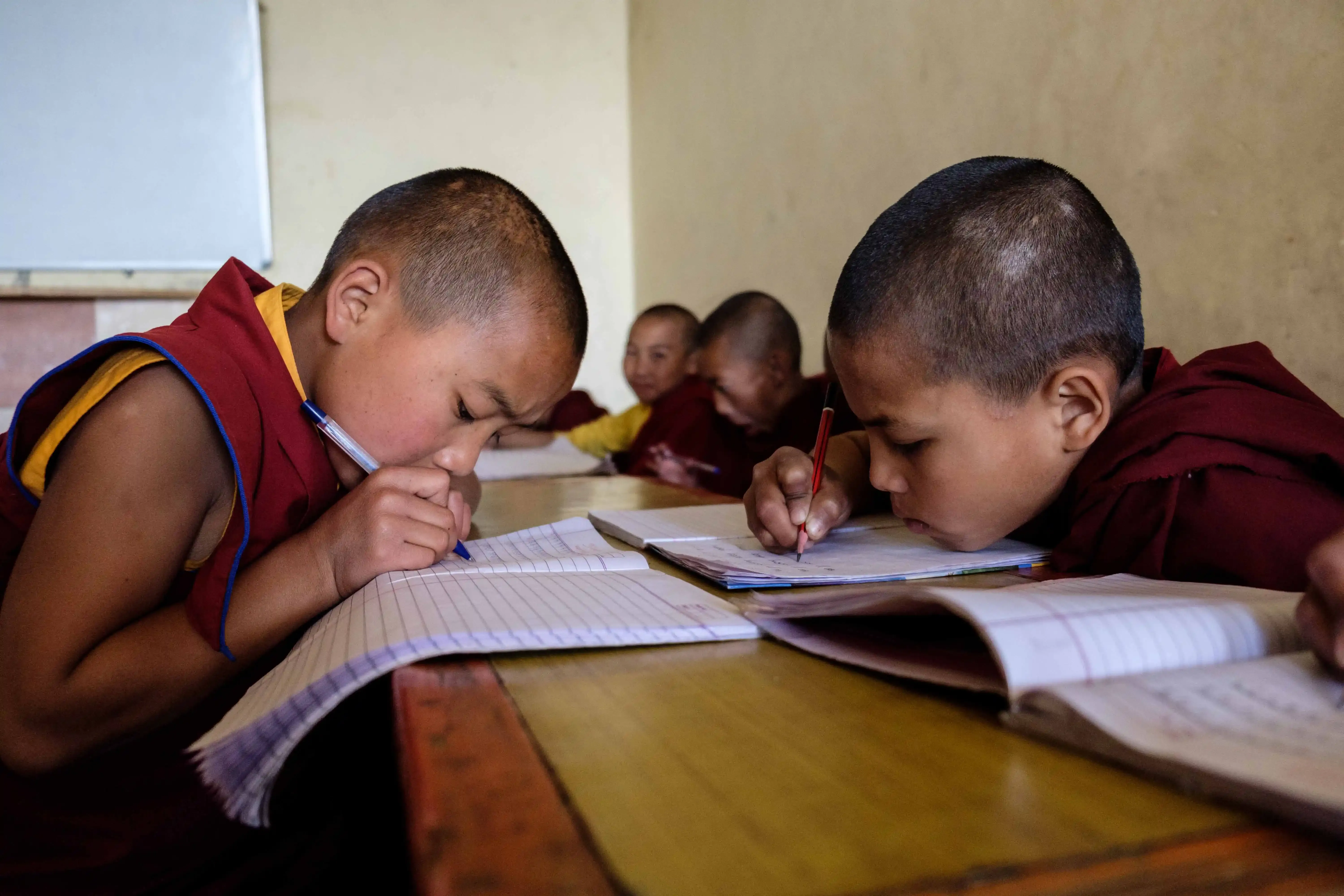
See how scholastic study, ritual training, retreat, and modern education are held together in one path of formation.
What distinguishes the site today is not only memory of a lost school, but the continuity of living teachers, long-term curriculum, ritual practice, retreat, and translation work.
Provide daily meals, clothing, and living supplies for the refugee monks. Your support directly sustains those dedicating their lives to study.
Make a Gift
The cost of reliable medical care places a daily burden upon the monastery. Help supply necessary medicine for elderly and ailing practitioners.
Make a Gift
Contribute to the continuous repair of dilapidated monastic buildings. This ensures a safe, warm shelter for the community to live and pray in.
Make a Gift